China’s CH-7 Flying Wing Stealth Drone Flies
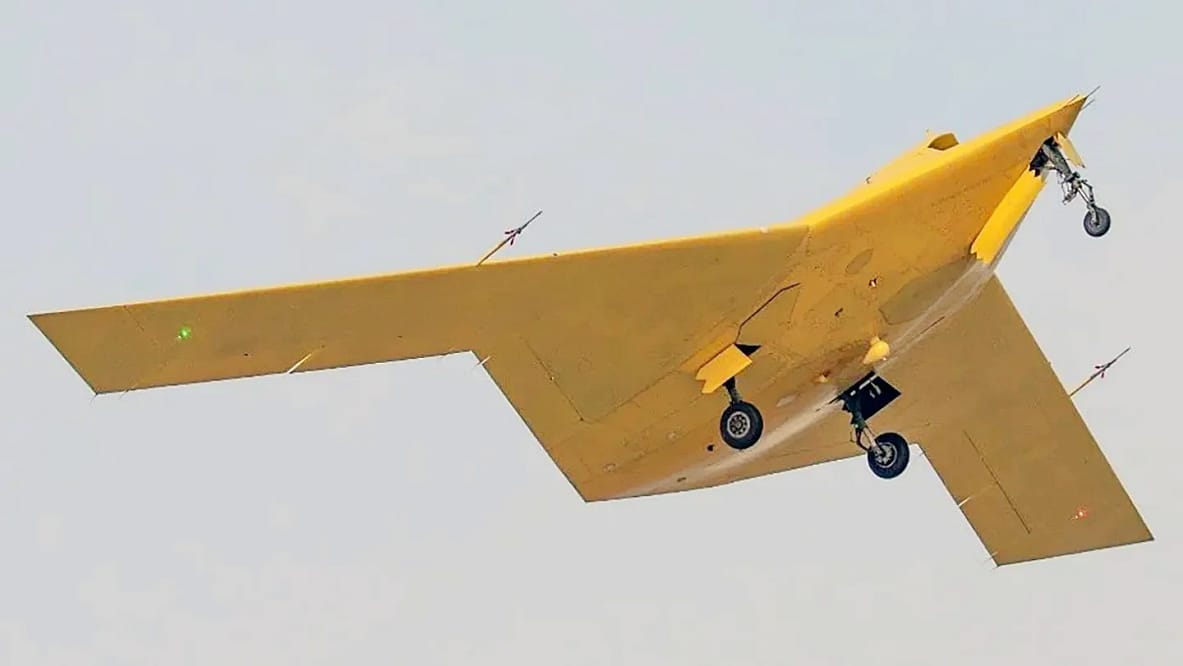
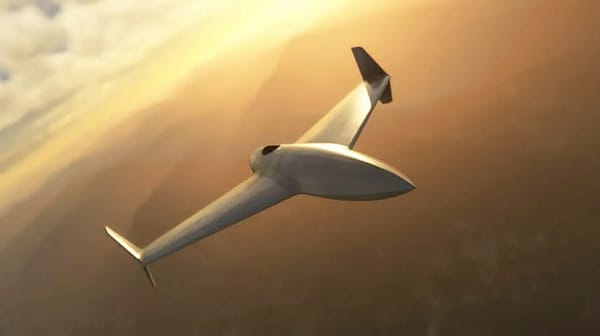
Video and stills just released by Chinese state media show China’s CH-7 stealthy flying-wing drone for the first time, being prepared for flight, taking off, and landing. It appears to be tailored for intelligence, reconnaissance, and surveillance (ISR), as well as possibly a secondary strike role.
The video includes air-to-air footage of the CH-7 and, overall, the suggestion is that Beijing is making a notable effort to promote the progress of this program, especially in contrast to other, far more secretive flying wing drone programs.
It’s also notable that the CH-7 appears to have made its first flight from Pucheng Airport in Shaanxi province, which also saw the recent maiden flight of the Jiutian heavyweight jet-powered ‘mothership drone.’ The Pucheng facility is operated by the China Flight Test Establishment (CFTE), underscoring its growing importance as a drone ‘center of excellence.’
[embed]https://vimeo.com/1146978925?share=copy&fl=sv&fe=ci[/embed]
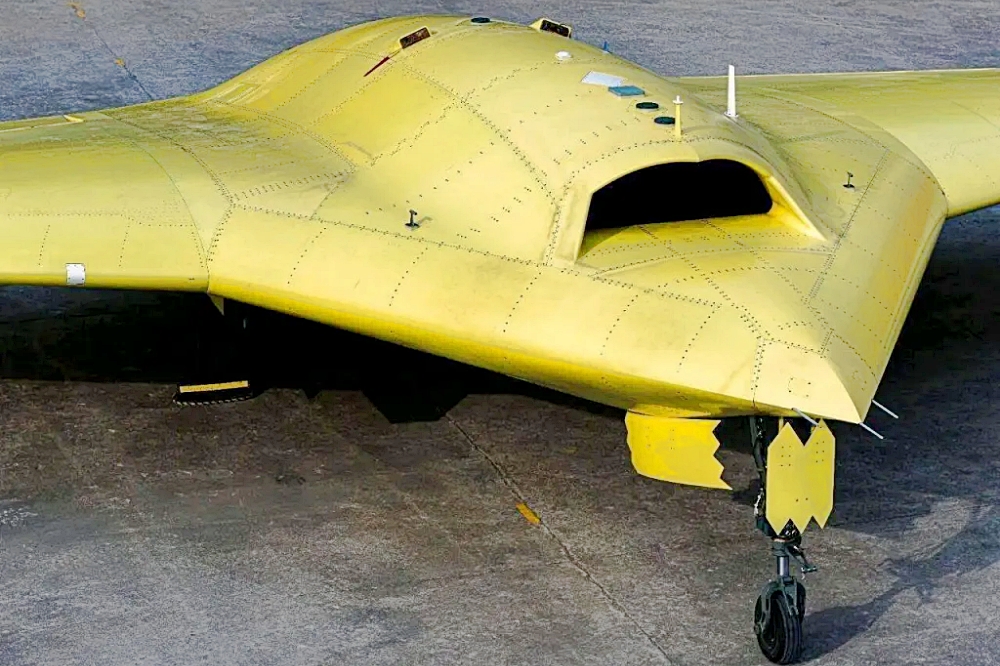
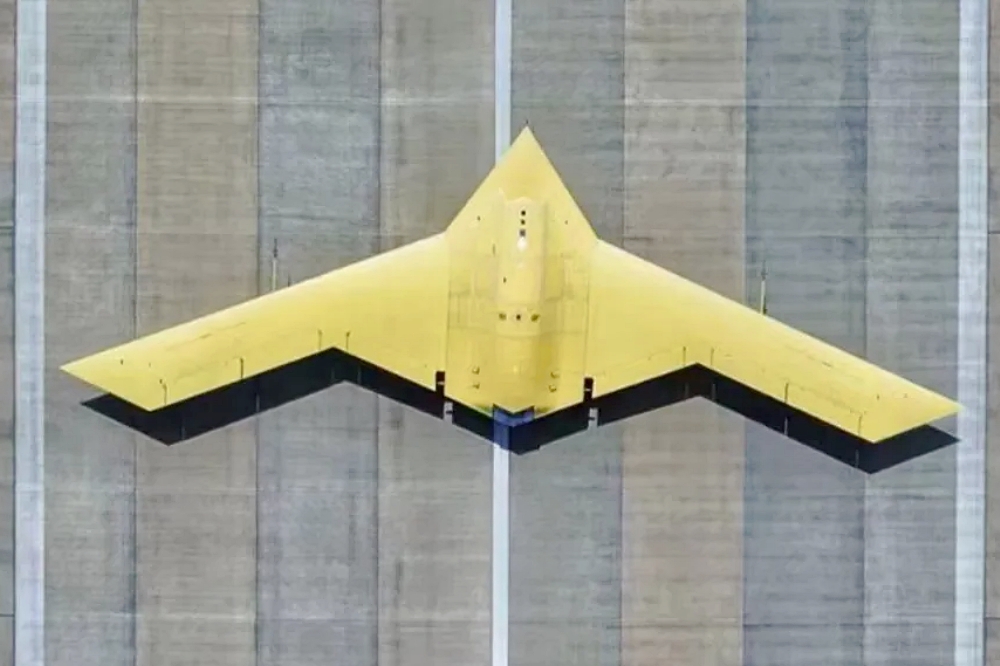
The CH-7 seen in the new imagery retains the yellow-coloured coat of primer that was seen in video and stills of the drone on the ground, released by Chinese state media earlier this year. Yellow primer is frequently seen on Chinese aircraft during their test phase. The drone also has air data probes on the leading edges of the wing and nose, again consistent with it being a prototype or perhaps a pre-production machine. Overall, the CH-7 has a ‘cranked-kite’ planform, of the kind that we have seen on various other Chinese drones. There are also various measures to reduce the radar and infrared signature, including a slot-like low-observable platypus engine exhaust, with the nozzle fully concealed from most angles of view, and serrated edges on doors and panels.
Interestingly, the attachment points previously seen on the upper surfaces of the rear of the drone have been removed in the new official imagery. It seems these were used to mount vertical tail surfaces.
Unofficial imagery, captured from an observer on the ground, suggests that the CH-7 was initially flight-tested with outward-canted tailfins, presumably to ensure stability during initial sorties, or otherwise to test an alternative aerodynamic configuration.
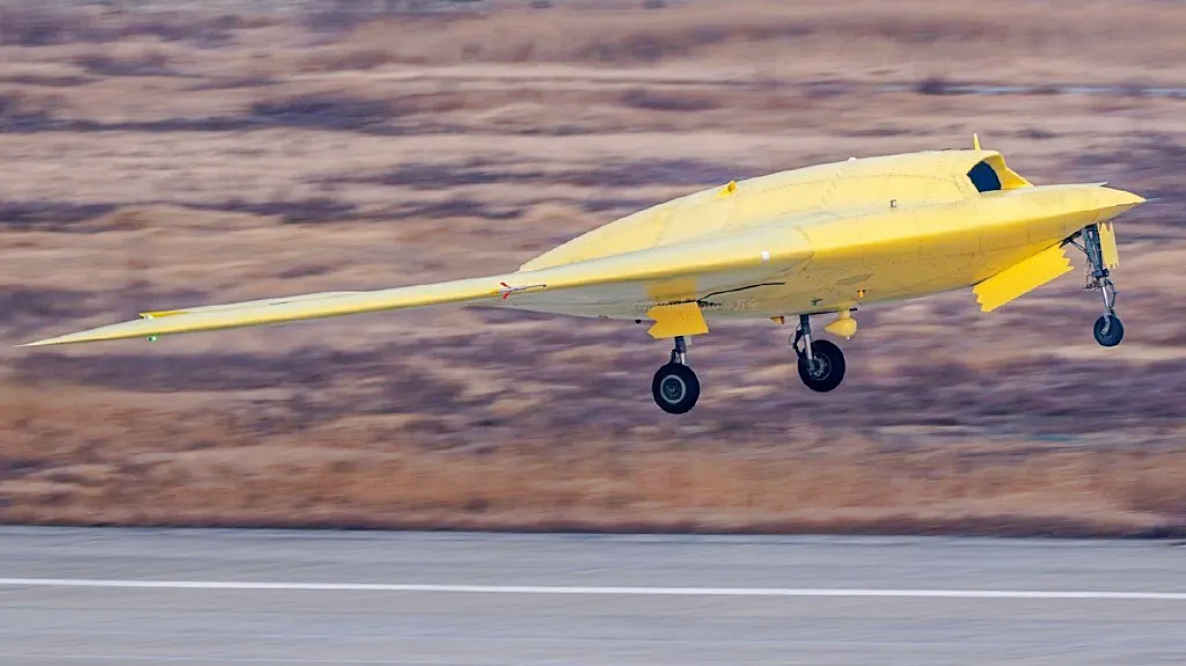
We now have a much better look at the series of antennas that runs in a line along the spine, flanked by two air scoops. There are also two prominent blade aerials, above and below the fuselage. Below the fuselage, immediately behind the nose landing gear, there appears to be a large radio frequency sensor aperture, and there could also be space for conformal arrays under the inner wings.
As we presumed, the previous prominent gaps inboard of the trailing-edge flaps, where the wing meets the blended body section, were a temporary configuration and have now been filled.
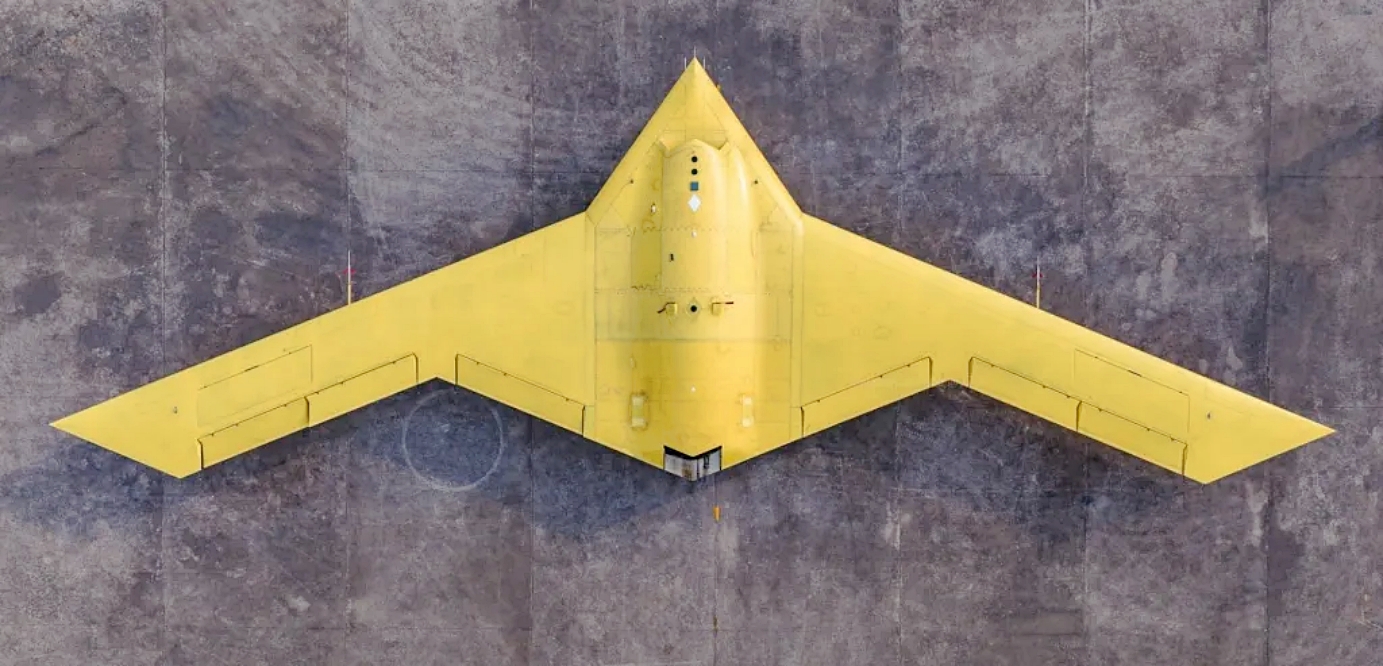
The CH-7 was previously assumed to have an internal payload bay. That is not immediately obvious in the new imagery, but there is a suggestion of a notably long and slender bay immediately inboard of the main landing gear on the right-hand side, presumably with a similar bay on the left-hand side, too. If these are indeed for weapons, then they would be able to accommodate smaller stores only. This could point to a secondary strike role, but that seems somewhat less than likely at this point.
Published specifications for the CH-7 include a length of 10 meters (33 feet), a maximum takeoff weight of 10,000 kilograms (22,000 pounds), a maximum speed of 926 km/h (575 mph), and an endurance of up to 15 hours. Bearing in mind the various design changes, these figures should be considered very much as provisional.
Source: The War Zone