Boeing Launches New Family of Tiltrotor Combat Drones
- Boeing has announced plans for a family of new, tiltrotor drones that are intended to support existing crewed military helicopters, especially those of the U.S. Army, providing something like an equivalent to the U.S. Air Force’s Collaborative Combat Aircraft (CCA). Indeed, the company describes the drones as “collaborative rotorcraft” and expects them to serve alongside more conventional helicopters undertaking attack, logistics, and other types of missions.
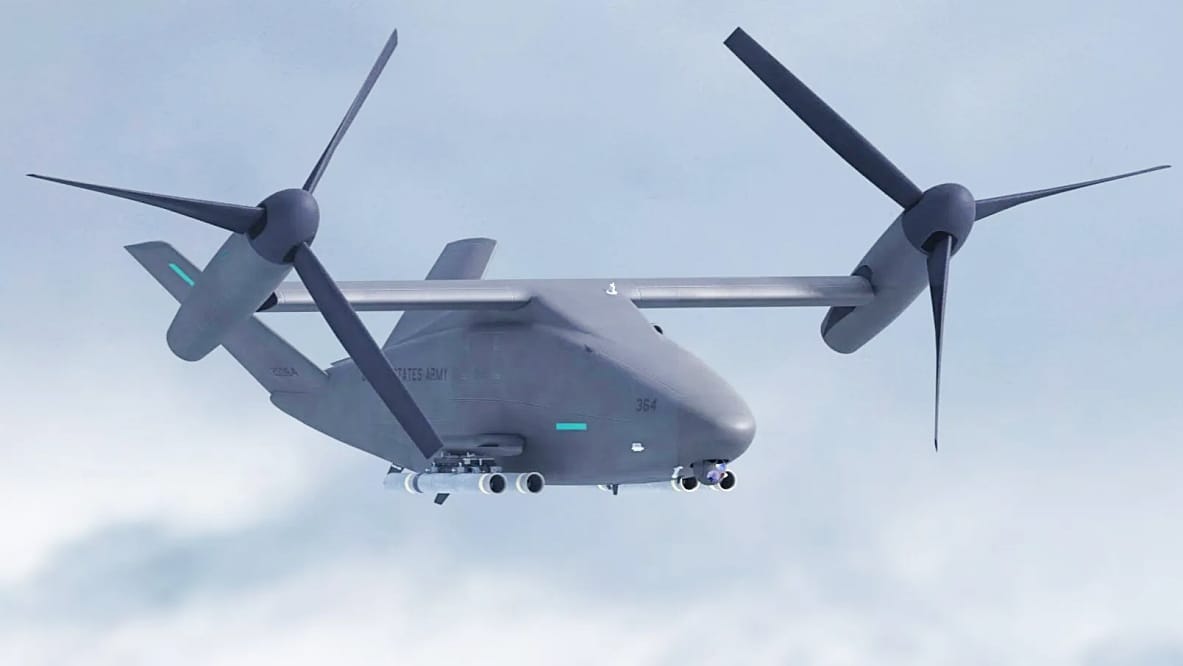
Renderings were revealed on October 13 by Boeing at the Association of the United States Army (AUSA) tradeshow. At least two rotary-wing drones are currently projected, both based on a tiltrotor design, drawing upon the company’s experience with the proven V-22 Osprey. However, the modular concept means more mission versions of the drones will be possible.
Boeing describes the drones as “completely uninhabited,” with no plans for them to be offered as optionally piloted platforms.
In each case, the drone has a high wing and a V-tail. Each will be powered by a single turboshaft engine driving a pair of prop-rotors. Boeing chose this “classic” powerplant option as it considered it the most mature technology, making it easier to get the drones into service rapidly. As part of its evolution, however, other propulsion systems might well be offered in the future, Boeing says, including hybrid electric/gas turbine.
Boeing has said that the drones will likely have a maximum gross weight in the region of 5,000 to 7000 pounds, including a payload in the range of 1,000 to 2,000 pounds, depending on range and specific mission load-out.
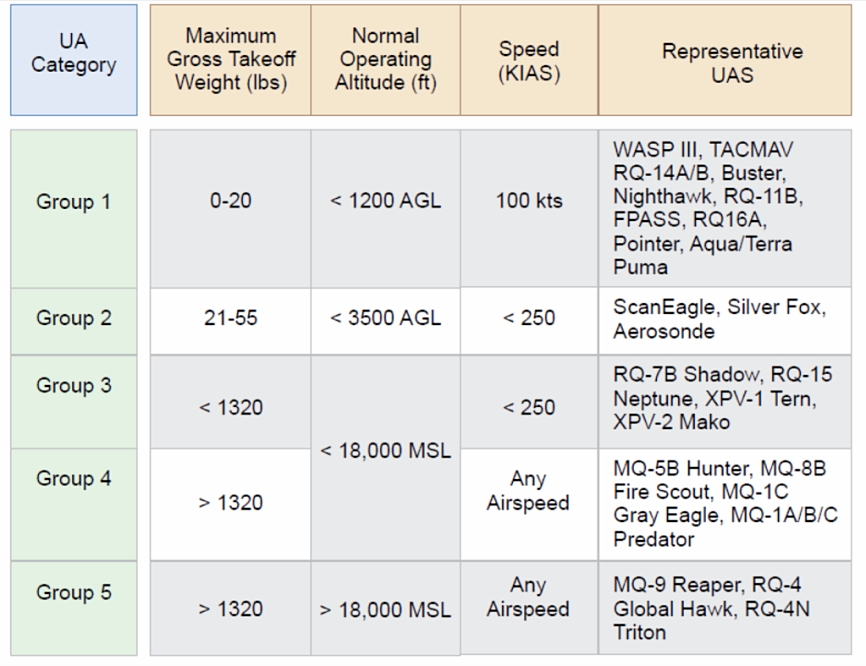
Speaking to journalists ahead of AUSA, Chris Speights, chief engineer for Boeing Defense’s Vertical Lift division, said the drones will have “relevant range [and] relevant payloads […] to truly be collaborative,” meaning they can keep up with a crewed helicopter’s mission profile. The drones will be in the Group 4 or 5 category. Of these, Group 4 encompasses drones weighing over 1,320 pounds, and operating at altitudes usually below 18,000 feet, while Group 5 covers the same weight category, but typically flying above 18,000 feet.
The first of the drones to be described in detail is the CxR, or Collaborative Transformational Rotorcraft. Speights explained:
“The idea is that the CxR is a modular core that we can adapt for things like a loyal wingman, collaborative rotorcraft, that would partner with an aircraft like the Apache or even the Little Bird or whatever else you may have.”
The CxR would be able to carry various types of effectors and other payloads, including launched effects (LE), which are smaller drones capable of being configured to strike, reconnoiter, and jam targets far from their launch platform. LEs are increasingly seen as being critical to the future survival of combat helicopters, especially when operating in higher-threat areas.
One rendering shows the drone carrying a pair of tubes on stub wings on each side of the fuselage, likely signifying launched effects. Speights outlines Boeing’s vision of Apaches, collaborative rotorcraft, and launched effects all working together as “layers of capabilities that we can apply to different situations.”

Speights said the CxR’s tiltrotor configuration is ideal for missions such as reconnaissance, surveillance, and target acquisition, or RSTA,
“That would enable it to fully support the types of attack, reconnaissance, and scout missions that the Apache performs,” Speights added. “It would be able to carry the payloads that are relevant for Apache-type missions.”
While the CxR is currently primarily being pitched as a drone that can operate collaboratively with the Apache, Boeing expects that it will have the relevant speed, range, and endurance to complement the Army’s forthcoming MV-75 tiltrotor assault transport as well. With this in mind, the company is targeting a speed in the range of 200 to 250 knots.
At the same time, the CxR will be designed to be expeditionary, so that it can be rapidly deployed aboard fixed-wing C-130 Hercules transports.
A logistics version of the new rotary-wing drone is also being proposed. This is the CLR (Collaborative Logistics Rotorcraft), which would be expected to augment the H-47 Chinook and other logistics platforms, especially in contested environments.
The logistics version of the drone would make use of the CxR’s common core, including the propulsion system,
“but we would simply replace the modular fuselage portion with something that can support the payload that would complement heavy- and medium-lift needs,” Speights explained. “When we think about the speed capability, we believe that being able to rapidly deploy the cargo is what adds value in this case. So we’ll get distance, we’ll get range, and speed. In a contested logistic environment, that can make all the difference if you’re bringing critical munitions to the battle and not risking human life.”
Boeing sees the new drones very much in the context of a broader “family of systems” approach, meaning they can work together with a range of platforms used by the U.S. Army and other forces around the world.
Source: The War Zone