Baykar Pledges to Rebuild Destroyed Ukraine Drone Factory
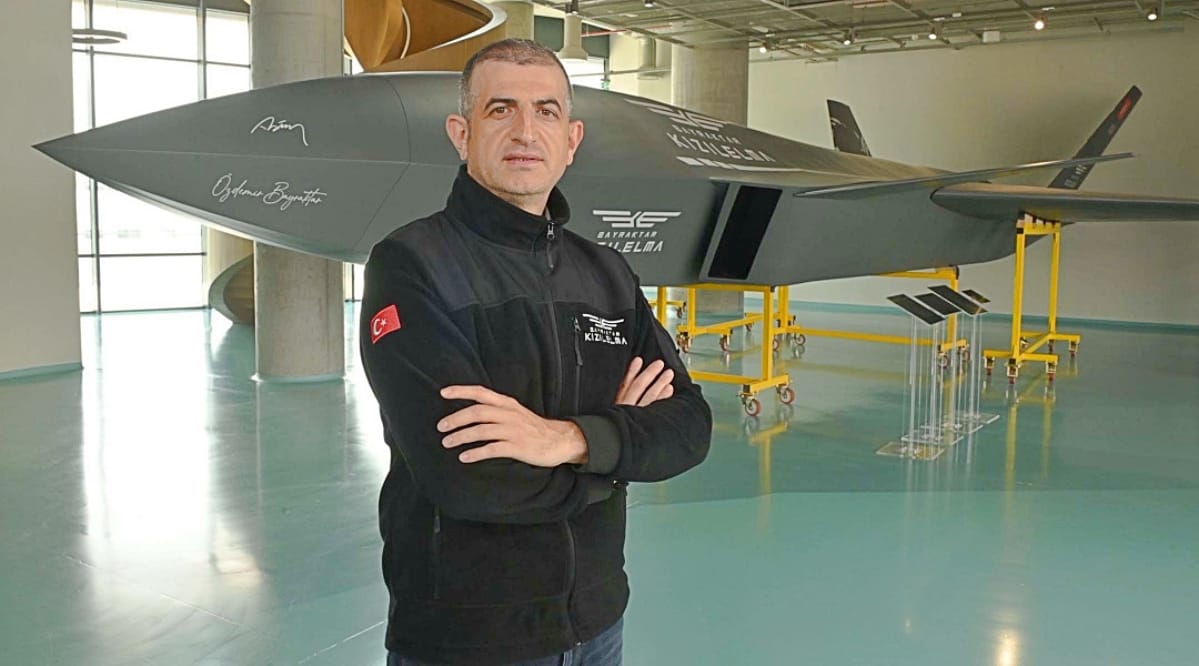
The CEO of Baykar, Turkey’s largest drone manufacturer and a major global producer of armed unmanned aerial vehicles, has pledged to rebuild the company’s factory in Ukraine, which was destroyed in a Russian missile strike.
In an interview with Ukraine’s state news agency Ukrinform, Baykar Chief Executive Officer Haluk Bayraktar said rebuilding of the facility is part of the company’s effort to maintain cooperation with Ukraine despite the war and to expand Turkey’s defence industry presence in Europe.
Baykar, which says it is the world’s leading exporter of armed drones, confirmed that the missile strike caused structural damage but no casualties. Damage assessment has been completed, and rebuilding will begin soon, Bayraktar said, describing the attack as another example of the conditions faced by Ukrainians during the conflict.
Cooperation with Ukraine
Baykar’s partnership with Ukraine began in 2019, when it sold its Bayraktar TB2 drones to Kyiv. The drones became widely known during the early stages of Russia’s full-scale invasion in 2022, when Ukraine used them in strikes on Russian military targets. Baykar later donated additional drones through international crowdfunding efforts.
The destroyed Ukrainian facility — which Bayraktar called “the most concrete symbol of our faith in Ukraine’s bright future” — was intended to produce and maintain drones using Ukrainian-made engines. The project, he said, reflects a long-term industrial partnership.
Ukrainian engineers and technicians are currently training at Baykar’s headquarters in İstanbul. Bayraktar described the program as a two-way exchange of experience and skills. These teams are expected to form the workforce when the Ukrainian plant resumes operations.
Baykar continues to use Ukrainian-made engines in its two main platforms: the AKINCI, a long-endurance combat drone, and the KIZILELMA, an unmanned combat vehicle still under development.
The KIZILELMA — meaning “Red Apple” in Turkish — is Baykar’s most advanced project to date. Bayraktar described it as a new-generation unmanned combat aircraft with advanced capabilities.
The KIZILELMA is designed with a maximum takeoff weight of around six tons and can carry a payload of up to 1.5 tons, including precision-guided munitions. It can reach speeds near Mach 0.9 (about 1,100 kilometers per hour) and operate at altitudes up to 40,000 feet. The model incorporates low-visibility features such as a reduced radar cross-section, an internal weapons bay and a lower infrared signature.
“Our goal is to begin delivering KIZILELMA to the Turkish Armed Forces starting in 2026,”
Bayraktar said, adding that the company has seen significant international interest in the system.
Expanding Partnerships in Europe
Baykar’s plans in Ukraine coincide with efforts to increase its footprint in Europe through acquisitions and partnerships. The company recently acquired Italian aircraft engine manufacturer Piaggio Aerospace and launched a joint venture with Italian defense contractor Leonardo, called LBA Systems, to develop unmanned technologies.
Italy’s Multi-Year Defense Programming Document for 2025–2027 allocates €3.2 billion for unmanned systems, including €2.4 billion for armed drones for the Italian Air Force, according to defense analyst Tommaso Massa in the RID magazine. Systems developed under the Leonardo–Baykar partnership are expected to be part of that program.
On October 6 a high-level Italian defense delegation visited Baykar’s production facilities in Tekirdağ and İstanbul. The delegation, which included Deputy Defense Minister Matteo Perego di Cremnago, senior military commanders and Leonardo executives, observed flight demonstrations of several Baykar systems, including the TB3, AKINCI and KIZILELMA. The event also featured live-fire tests using Turkish-made MAM-L munitions produced by ROKETSAN.
Technological Outlook
Looking ahead, Bayraktar said Baykar aims to develop autonomous and AI-supported systems in stages over the coming decades. He projected that within 10 years, drones will operate in coordinated swarms; within 20 years, they will feature integrated artificial intelligence for decision-making; and within 50 years, defense systems will link air, land, sea, cyber and space capabilities under a unified autonomous framework.
He described this as part of a long-term research and development plan rather than an immediate operational goal.
Source; Turkish Minute;