Australian University Adds Chameleon-like Capabilities to Drones
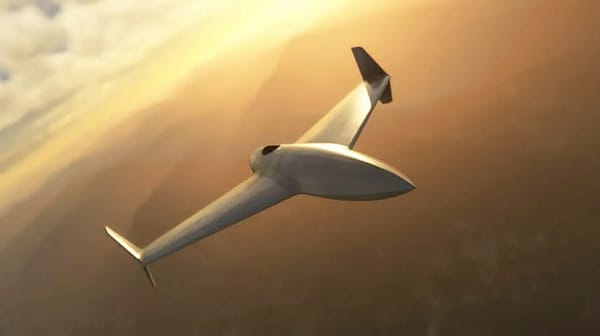
In conjunction with the Department of Defence, University of South Australia material scientists have developed a range of lightweight panels that can change colour on demand, allowing drones to match their appearance to the background colours of the sky.
Ever since the French had the bright idea of using hydrogen balloons for military surveillance in the late 18th century, aviation capability has played a central role in intelligence, surveillance and reconnaissance (ISR) operations.
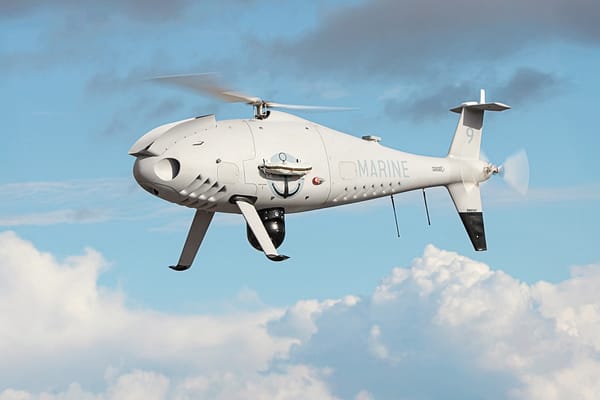
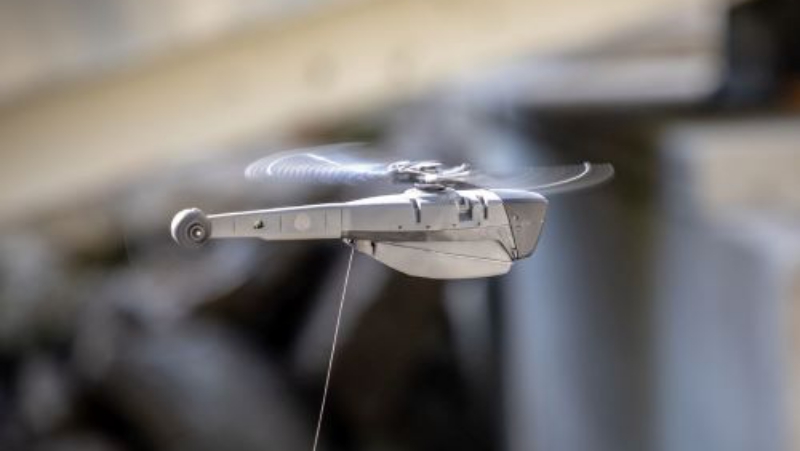
Today unmanned aerial vehicles (UAVs), or drones, are a huge asset for ISR. The Australian Army has drones ranging from the tiny Black Hornet – which is about the size of a whiteboard marker – to larger models with wide ranging surveillance capabilities.
Despite their ubiquity and utility, however, all military UAVs are currently hindered by the same simple problem – the sky changes colour, but they don’t.
Given the huge importance of remaining undetected during ISR operations, the static colour of drones can be a significant problem, but now, thanks to researchers at The University of South Australia’s Future Industries Institute (FII), the solution is at hand.
In a collaboration with the Department of Defence, FII researchers, led by Dr Kamil Zuber, have developed a range of lightweight polymer panels that can change colour on demand.
The polymers are what are known as electrochromic materials, meaning they change colour in response to an electric field, and the exact colours can be tuned to specific voltages.
“But those applications are slow, require high power consumption to switch, and the electric flow must be maintained to sustain the change state.
“Our panels, on the other hand, have switching speeds in the range of seconds and offer colour memory, which means they retain their switched colour without a continuously applied voltage.
“They also operate in the range from -1.5 to +1.5 volts, which means you only need to use an AA battery to activate the change.”
In addition to their chameleon-like characteristics, the panels are inexpensive, lightweight and durable, and can be either rigid or flexible, making them ideal for use on drones of all sizes and specifications.
“We have five or six different materials, and each of the materials can produce two to three distinct different colours.”
The technology is currently being refined to integrate self-awareness and autonomous adjustment into the system, so drones will be able to automatically change colour in response to changes in the surrounding environment.
“So, if the UAV passed in front of a cloud, it would turn pale, then when it moved back into blue sky, it would turn back to blue.”
Source: Press Release