ATD-150 - Brazil's First Fully Indigenous Jet-Powered Drone
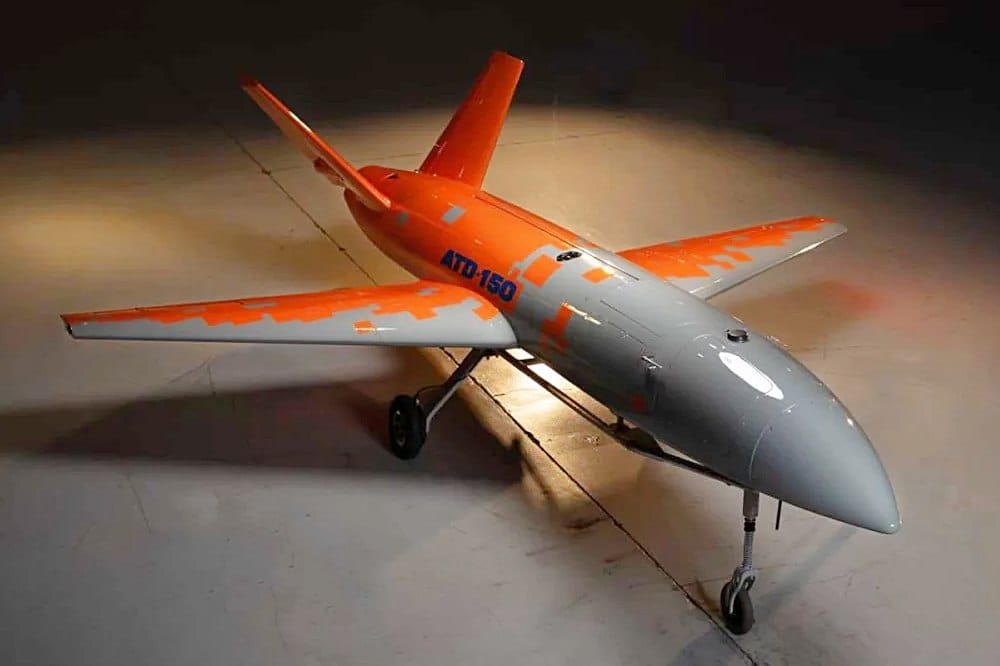
Brazilian company Nest Design Aerospace presented the ATD-150, described as the country’s first 100% indigenously designed jet-powered unmanned aircraft. The system has been developed specifically to serve as an aerial target for the Brazilian Armed Forces and is also being considered for export to international users.
According to the manufacturer, the ATD-150 is intended to replicate advanced aerial threats in training environments and aims to enhance operational readiness by providing a domestic solution for simulated combat exercises and system testing.
According to available information, the ATD-150 has a maximum takeoff weight (MTOW) of up to 150 kilograms and a maximum payload capacity of 15 kilograms. It can operate at altitudes between 10,000 and 15,000 feet, with a service ceiling of 20,000 feet. Under flight conditions of FL150 and ISA+35, it achieves a cruise speed of Mach 0.6. The propulsion system is the TM TJ-200 turbojet engine, developed in Brazil by Turbomachine. The UAV runs on Jet A-1 or aviation kerosene. Nest Design Aerospace states that this configuration enables the ATD-150 to function as a high-speed, jet-powered target suitable for complex and realistic threat simulations during training operations and air defense exercises.
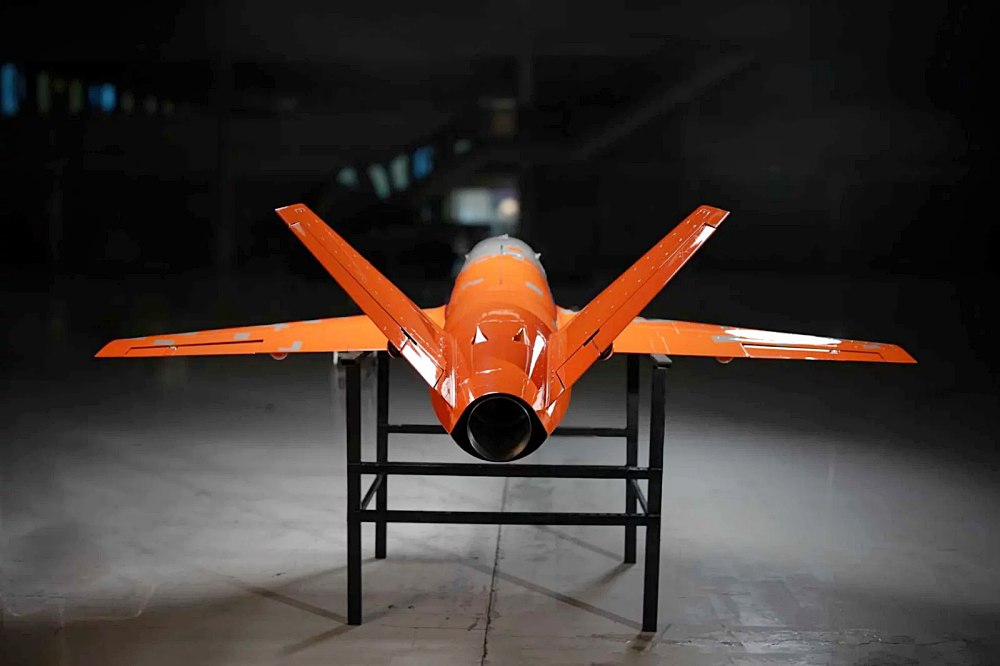
The main mission profile of the ATD-150 includes applications such as air strike training, air-to-air engagement training, air defense system preparation, and cruise missile threat simulation. It is also intended to support intelligence data collection and the evaluation of defense weapon systems. The UAV is equipped with a number of onboard features designed to simulate adversary behaviors and characteristics. These include pre-programmed waypoint navigation, a smoke generator to increase visibility during tracking exercises, and automated evasive maneuver routines.
It also integrates a Miss Distance Indicator (MDI) for recording the proximity of intercept attempts, and features passive RF signal augmentation, real-time video transmission capability, and an infrared (IR) signature. Piloting can be conducted manually or through semi-autonomous or fully autonomous control modes, depending on mission requirements.
Nest Design Aerospace characterizes the ATD-150 as a fully Brazilian initiative, conceived, engineered, and assembled within the national defense industrial base. According to the company, the program reflects an effort to establish a national capability in the field of jet-powered aerial target drones, offering a resource for training and system validation that does not rely on foreign platforms. The aircraft is also described as a system supporting multiple configurations and intended to meet the operational needs of armed forces preparing for advanced air threats.

As part of its promotional and industry engagement efforts, Nest Design Aerospace participated in LAAD 2025, a major defense and security exhibition held in Rio de Janeiro. The company reported that its team engaged with suppliers, potential partners, and clients during the event. Nest Design Aerospace noted that the ATD-150 attracted attention at the exhibition, with many participants reportedly already familiar with the platform. According to the company, this exposure helped reinforce its goal of advancing new strategic collaborations and increasing the visibility of its aerial target program within both national and international defense sectors.
Nest Design Aerospace also released material announcing that the ATD-150 is approaching its initial operational phase. According to the company, all development activities, ranging from component integration and functional testing to performance verification, are progressing toward what it describes as a significant milestone in national aviation. Additional video materials were released, highlighting the design and testing phases of the program. The company stated that further updates and detailed views of the UAV are expected in the near future.
Source: Army Recognition