Airbus Prepares A400M for FCAS and Mothership Drone Operations

In view of increasingly demanding missions, the A400M's capabilities are constantly being expanded. Effective communication is an essential part of military operations, but it is also undergoing radical change. Connectivity is paramount, with data playing an ever more important role. Looking ahead, the Future Combat Air System (FCAS) will link together various platforms from 2040 onwards, enabling the seamless exchange of critical mission information.
At the heart of FCAS lies the Combat Cloud. This is where critical data comes together, is analysed and then disseminated. All of this requires a quick data exchange. Without it, responding promptly and effectively to complex situations would be impossible.
In the context of connectivity, the A400M could act as a communications hub, distributing information to other airborne and ground-based systems. As a military aircraft with civil certification, the A400M is equipped with encrypted radio systems and the communication tools of passenger aircraft. All of these fall under the category of narrowband communications, which operate at low data rates as they are primarily designed to transmit voice and basic data.
In the future, the A400M will need to switch to broadband to leverage higher data rates. A broadband satellite connection would then enable the aircraft to send and receive large amounts of data from anywhere in the world. In the event of disrupted satellite communication, a line-of-sight system would facilitate communication along a direct sightline with other platforms in the air or on the ground.
Thanks to the higher bandwidth, one could envisage the A400M transmitting live video feeds from missions to the cloud, providing visual support for mission-critical decisions. Analysing data collected from different platforms could, in turn, enable tactical decisions almost in real time.
A Mothership for Drones
Unmanned aerial systems are already a central component of military operations. And they will only become more important in the future, contributing to mission success in close cooperation with pilots.
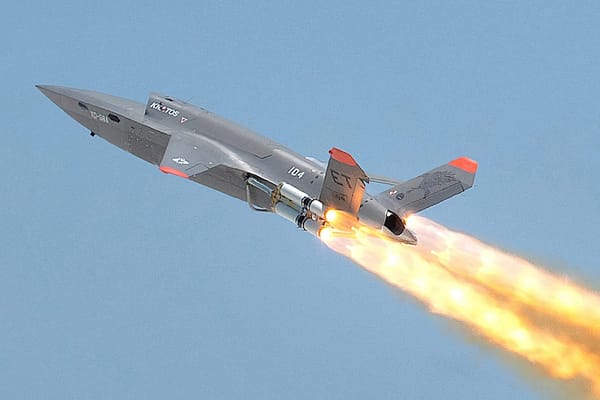
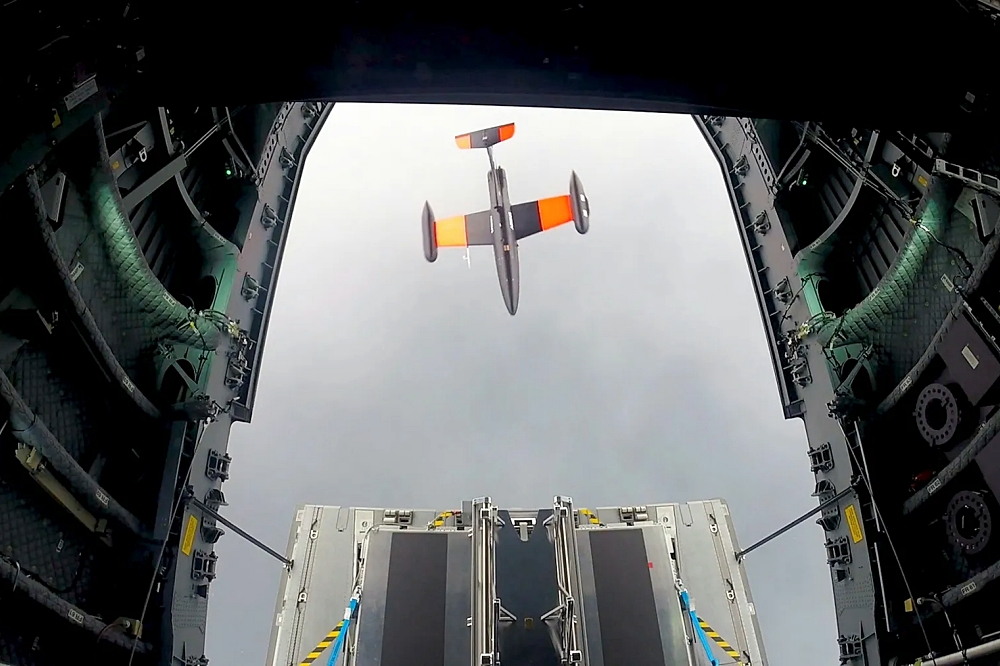
As a transport aircraft, the A400M could play a central role, bringing unmanned platforms, so-called Remote Carriers, as close as possible to the theatre of operations and commanding them if needed. Thanks to its large payload and range, the A400M could deploy up to 50 small or 12 heavy Remote Carriers.
The seamless integration of manned and unmanned systems is a key component of FCAS. However, the A400M could take on the role of a mothership for drones even earlier than that. Tests are already underway: At the end of 2022, Airbus Defence and Space, together with various partners, launched a Remote Carrier flight test demonstrator from an A400M.
Ready for Electronic Combat
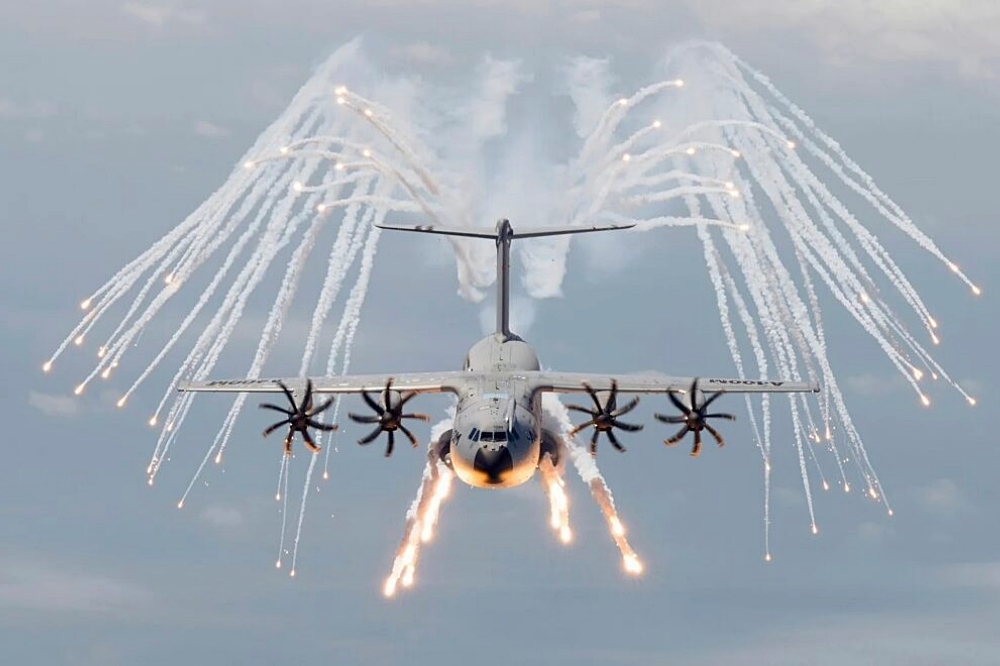
Electronic warfare has become a cornerstone of modern defence strategy. On the one hand, this involves sophisticated self-protection systems for the platforms deployed; on the other, it revolves around applying active jamming capabilities to neutralise enemy air defences or drones. The A400M is already equipped with a variety of state-of-the-art self-defence mechanisms. And it will become even safer: Airbus will equip 23 A400Ms of the German Air Force with DIRCM protection systems, protecting them against infrared-guided missiles.
Regarding active jamming, the A400M could also be used as a stand-off jammer platform that operates outside of the contested airspace and can disable enemy systems from a safe distance. The A400M would be well suited for this critical role for several reasons:
- Structural readiness: To cover the role of a stand-off jammer, the aircraft must carry a high number of antennas. The A400M offers enough space to accommodate all of them.
- Sufficient power supply: The A400M's four engines and generators provide sufficient electrical power.
- Versatility: The stand-off jammer role fits seamlessly into the A400M's operational profile, complementing its other core capabilities, such as airlift, air-to-air refuelling, and medical evacuation.
- Acting as a receiver: The aircraft's ability to be refuelled in the air makes it ideal for extended jamming missions.
Heading into the Future
The continued development of the A400M is in full swing. At the end of 2024, Europe’s Organisation for Joint Armament Cooperation (OCCAR) — an international organisation that manages the A400M programme on behalf of the launch customer nations — agreed with Airbus on the Block Upgrade 0. This upgrade will involve improvements to key elements of the A400M's systems, including tactical information enhancements and the implementation of a satellite-based landing system. It will also ensure the A400M fleet fully complies with the latest NATO requirements.
The A400M already boasts numerous key capabilities today that make it an indispensable tool in operations. A continuous flow of targeted enhancements will ensure that it remains at the cutting edge of technology in the future as well.
Source: Airbus