Air Taxi CEO Says No Viable Business Case to Support eVTOL Air Taxi Operations
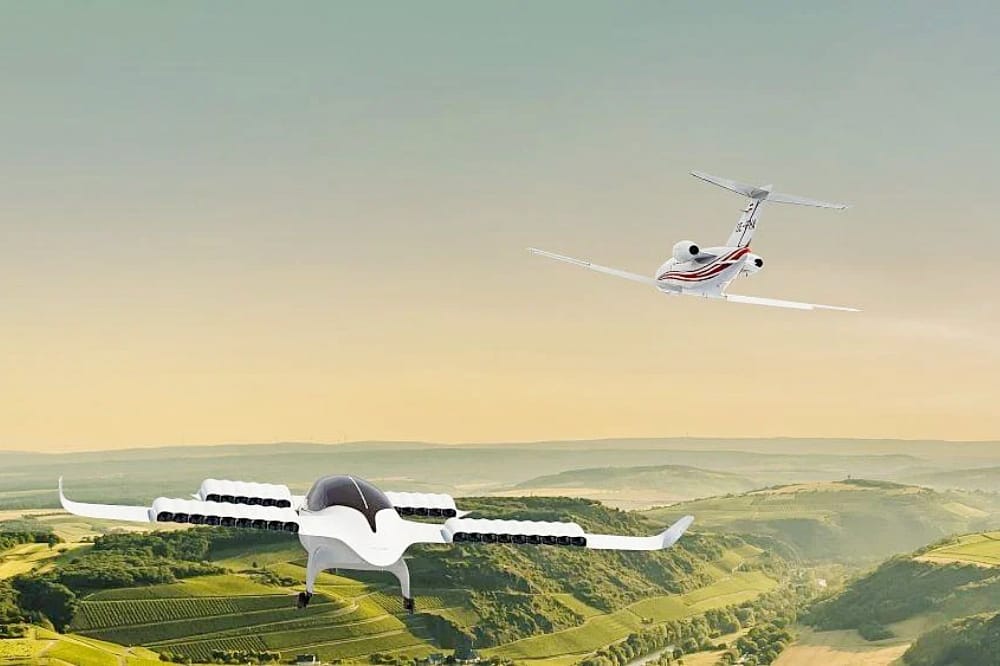
The founder of a European air taxi service that had signed a deal to introduce an eVTOL platform into its fleet says there is “no business case” to support wide-scale adoption of this emergent class of aircraft.
GlobeAir.
GlobeAir, which sometimes refers to itself as an “air taxi” service, operates a fleet of around 20 Citation Mustang light jets on an on-demand charter basis, connecting a network of 984 airports around Europe. Fragner had hoped to operate the Lilium Jet to carry out “last mile” operations. The firm works with helicopter operators to offer its customers onward transportation in certain parts of the continent, but had encountered significant problems with this model.
“Flying on private jets is nice and efficient,” he tells Aviation Week, “but the last mile is always a hassle. You are efficient on the jet but you lose all the benefits and efficiency on the last mile. When the discussion was coming up about eVTOLs and the first concepts, I was very keen to learn more, because I knew that helicopter operation is expensive, and we learned that, in particular, female customers do not like flying on helicopters.”
Absorbing feedback from customers that suggested it was vibration, noise and safety concerns that were putting women off helicopters, GlobeAir began investigating the emerging eVTOL market. In September 2022 the firm signed a memorandum of understanding with Lilium which gave it exclusive rights to fly the Lilium Jet on a number of routes in the Mediterranean.
“So I said, ‘OK, this is interesting’. And if there’s one project in Europe that may get the funds—the financial support, and from the political side as well, and maybe from the regulator—[then] this could be a unicorn in this industry.’”
The deal between GlobeAir and Lilium did not see any money change hands. The operator was given the exclusive rights to operate the aircraft in Sardinia, the Balearic Islands, the Cote d’Azur region and Tuscany for three years, and a 30% discount on the aircraft’s list price. In exchange, GlobeAir guaranteed that it would have financing in place for when the aircraft were to be delivered.
“Having a really huge discount on the asset [was necessary for GlobeAir] to get the model working,” Fragner says. “You can’t expect that you have fully utilized assets from the beginning. We didn’t want to invest in ... educating the market. It must be in the interests of Lilium to invest in this, and this was possible by supporting the asset purchase price, and by giving us some benefits on the operational side.”
A key part of those operational benefits was that Lilium agreed to replace the aircraft’s batteries at no cost to the operator.
“When they came up with the battery performance and the hourly costs to replace the battery, it’s insane,” Fragner says. “So they said: ‘OK, we’ll take care of the batteries, it’s not your problem.’”
There were other problems that began to emerge.
“One thing that was a big concern, and was not resourced in the conceptual phase, was infrastructure on the ground,” Fragner says. “This was a big question mark, and I was not expecting that we’d have barriers there. We couldn’t find FBOs [fixed base operators] or investors who were really interested in investing in the landing pads and the charging infrastructure. We only found one guy who was interested in building proper infrastructure. It’s a chicken-and-egg problem: you can’t operate eVTOLs when you haven’t got the charging infrastructure in place. But everyone was really shy [of investing] because obviously the investment needed to build that infrastructure is quite heavy.”
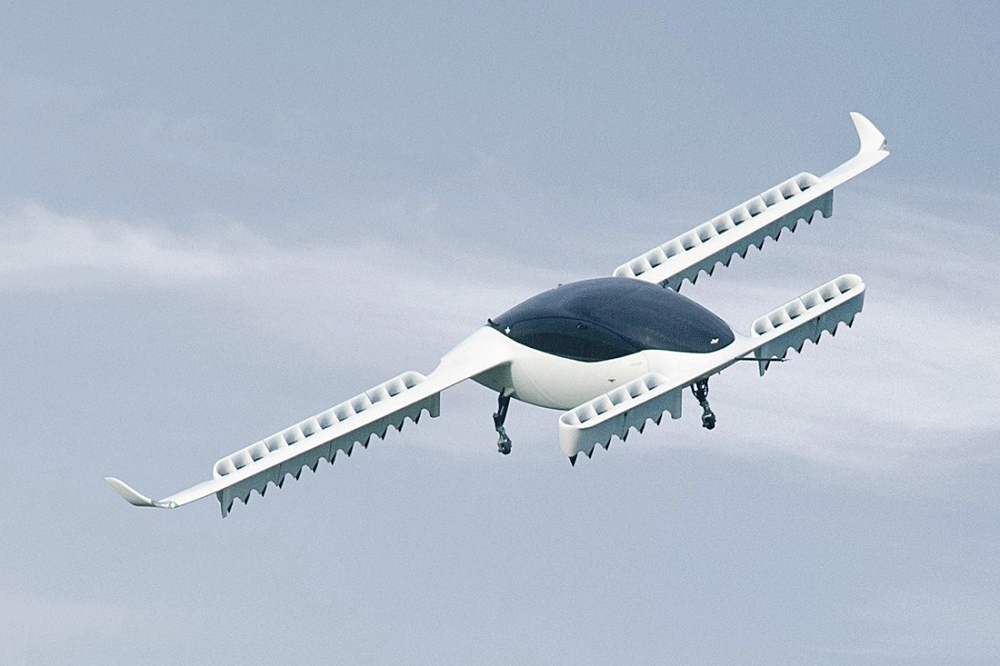
Following Lilium entering insolvency in October 2024, Fragner’s hopes for solving the last-mile problem have shifted.
“What I think likely will happen is all the learnings of the [eVTOL] projects will come to the helicopter companies—and, like in the automotive industry, they will develop hybrid models,” he says. “I think this [will be] a transitional technology, and will bring down the costs slightly. But efficient last-mile [solutions] will still be exclusive and for a small number of people.”
And does the founder of an air taxi company that has completed more than 600,000 flights have any lessons he has learned that could be passed on to would-be eVTOL operators and developers?
“You can scale up the business on an Excel spreadsheet, but the reality is different,” he says. “Why? The investment behind it. It’s a heavy asset, old-school type of business, and this hinders you in scaling it up. Scaling, democratizing and socializing the product is limited by the investment, and the margins are too low [to interest sufficient investors]. It’s complex, highly regulated, with low margins—this is why this industry is not taking off.”
Source: Aviation Week