Air Force Releases First Video of XQ-67 in Flight
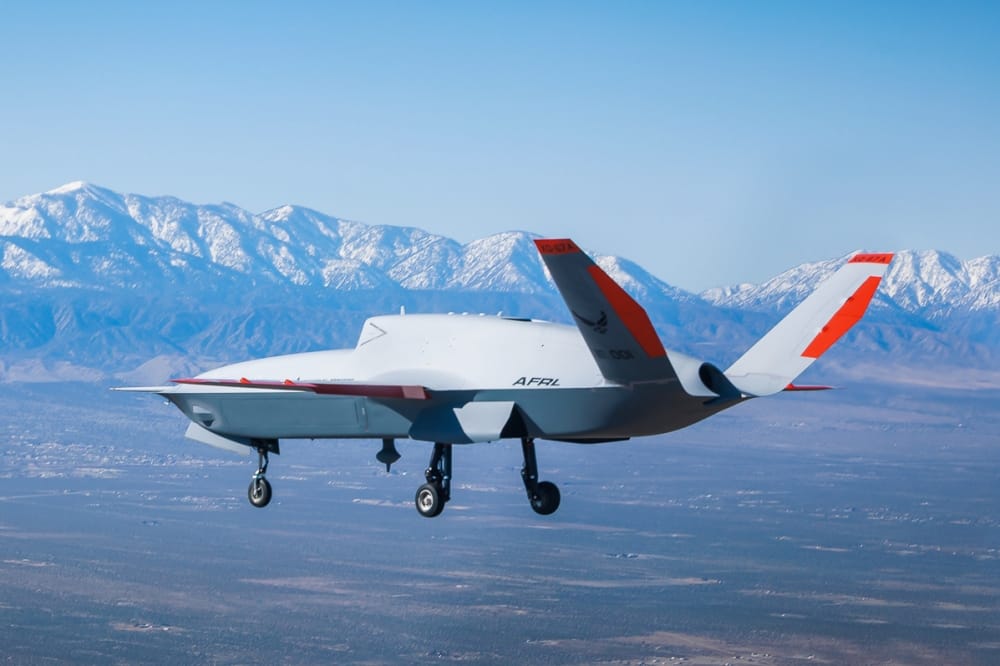
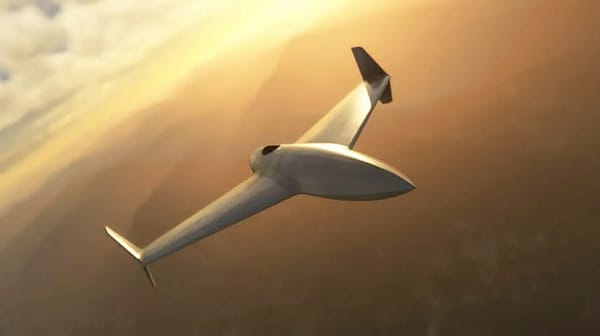
The US Air Force Research Laboratory successfully flew the first of a second-generation of Autonomous Collaborative Platforms known as the XQ-67A demonstrator, built and flown in the Off-Board Sensing Station (OBSS) program Feb. 28, 2024.
The AFRL Off-Board Sensing Station program is the validation of a design, build and test process that has resulted in the XQ-67A. It is the first of its kind to be built on a common chassis or genus — much like that of a motor vehicle frame — and with its first successful flight, the XQ-67A is proof that the genus approach works. This enables a faster and more cost-effective replication of the aircraft.
This new approach also responds to the challenge of great power competition by speeding delivery of affordable, advanced capabilities to the warfighter. The XQ-67A is remotely piloted but is capable of autonomous flight.
The first test flight of the XQ-67A, took place at the General Atomics Gray Butte Flight Operations Facility near Palmdale, California.
The XQ-67A is part of the Air Force Research Laboratory’s Low-Cost Attritable Aircraft Platform Sharing (LCAAPS) program to test a so-called Off-Board Sensing Station (OBSS), which is exploring data-sharing technologies hosted on an autonomous drone. The aircraft is piloted remotely but capable of autonomous flight. It is the Air Force’s follow-up to Kratos’s XQ-58A Valkyrie, which was originally developed under the USAF’s Skyborg autonomous aircraft program and is now being tested by the U.S. Marine Corps.
Sources: AFResearchLab; Air & Space Forces Magazine