100m Flying Height Best for Forest Analysis

Scientists with the New Hampshire Agricultural Experiment Station at the University of New Hampshire recently analyzed effectiveness of Unmanned Aerial Systems – that’s drones, to you and me – to collect meaningful information about the health and status of forests.
“To form comprehensive understanding of natural environments and their patterns of change, scientists and resource managers must use modern tools to assimilate mass amounts of heterogeneous data, at multiple scales. Then, they must translate that data into useful decision-making information. Unmanned Aerial Systems offers new opportunities to provide such information,” they said.
According to Congalton and Fraser, Unmanned Aerial Systems offer users the ability to capture imagery at unprecedented spatial resolutions due to their flexible designs, low costs, automated workflows, and minimal technical knowledge requirements. Their rapid extension into new disciplines such as natural resources and the environment brings with it a necessity to question and understand data quality of the respective products.
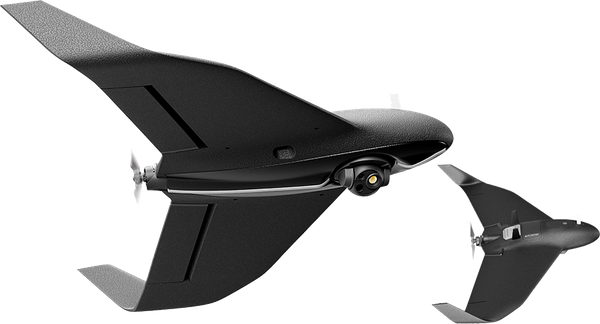
Experiment station scientists conducted research using an eBee Plus, fixed-wing drone on three woodland properties owned and managed by the University of New Hampshire – the Kingman Research Farm, Moore Field, and West Foss Farm. These properties total approximately 154.6 ha of forested land and 235.2 ha of total area.
Researchers were interested in evaluating the impacts of flying height on Structure from Motion (SfM) processing success, discrepancies in software output results, and the effects of processing parameter quality. Structure from Motion is a photogrammetric imaging technique for estimating three-dimensional structures from two-dimensional image sequences.
After experimenting with flying the eBee Plus at heights of 50m, 100m, and 120m above the forest canopy, scientists concluded it is impractical to process imagery captured at lower than 100m. Overall the 100m flying height provided the highest quality results.
Regarding software output results, Congalton and Fraser compared Agisoft PhotoScan with Pix4D Mapper Pro, two leading SfM software packages. They found greater image calibration success and model resolution with Agisoft. Finally, a comparison of high and medium quality processing workflows in Agisoft showed only marginal advantages in choosing the added data quality over the added time.
This research is presented in the journal Remote Sensing in the article Issues in Unmanneed Aerial Systems (UAS) Data Collection of Complex Forest Environments (DOI). Congalton also recently presented this research at the 2018 NH Farm and Forest Exposition in the educational session Using Unmanned Aerial Systems to Map Forests: Some Lessons Learned.
This material is based upon work supported by the NH Agricultural Experiment Station, through joint funding of the National Institute of Food and Agriculture, U.S. Department of Agriculture, under award number 1002519, and the state of New Hampshire.
Photo: Researchers mapped UNH's College Woods using UAS - Russ Congalton/UNH
Source: Granite Geek